
 What documents do I need to file taxes as a nonresident?
Filing U.S. taxes as a nonresident can feel intimidating, especially if this is your first time dealing with the IRS. At J1 Summer Tax Back, we work every day with J-1 visa holders, international students, interns, and trainees who are unsure which documents they actually need to file correctly and stay compliant.
The good news is that once you know what to gather, the process becomes much more manageable. Below is a clear, practical checklist of the documents most nonresidents need, explained in plain language by J1 Summer Tax Back.
Core documents every nonresident should prepare
Before you even start your tax return, make sure you have the following basic information available:
- Passport
- All U.S. entry and exit dates for your current and previous visits
- Visa and immigration documents
- Form DS-2019 for J-1 visa holders
- Form I-20 for F-1 students
- Social Security Number (SSN) or Individual Taxpayer Identification Number (ITIN) if you have one
- Copies of any income forms you received during the tax year
At J1 Summer Tax Back, we use this information to determine your tax residency status, filing obligations, and which IRS forms apply to your situation.
Income documents you may receive
Not every nonresident receives the same forms. It depends on how you earned money in the U.S.
Form W-2
You will receive a W-2 if you worked as an employee in the U.S.
This form reports:
- Your total wages
- Federal and state taxes withheld
- Employer information
Your employer must issue your W-2 by 31 January. If you worked during 2025, you should receive it by 31 January 2026. If you do not receive it, contact your employer immediately.
J1 Summer Tax Back uses your W-2 to calculate whether you are due a refund or owe additional tax.
Forms 1099
You may receive a 1099 if you earned income that was not paid as employee wages.
Common types include:
- 1099-NEC for freelance or independent contractor income
- 1099-DIV for dividends from investments
- 1099-INT for interest from bank accounts
If you received any of these, they must be reported on your nonresident tax return. Ignoring them can lead to IRS penalties, something J1 Summer Tax Back helps you avoid.
Form 1042-S
Form 1042-S is one of the most common sources of confusion for nonresidents.
You may receive a 1042-S if you had:
- Taxable scholarships or stipends
- Income exempt under a tax treaty
- Certain prizes, awards, royalties, or service payments
Universities, employers, or financial institutions issue this form, usually by 15 March. Even if no tax was withheld, the income must still be reported.
At J1 Summer Tax Back, we see many cases where 1042-S income was taxed incorrectly and a refund was missed. Proper reporting is critical.
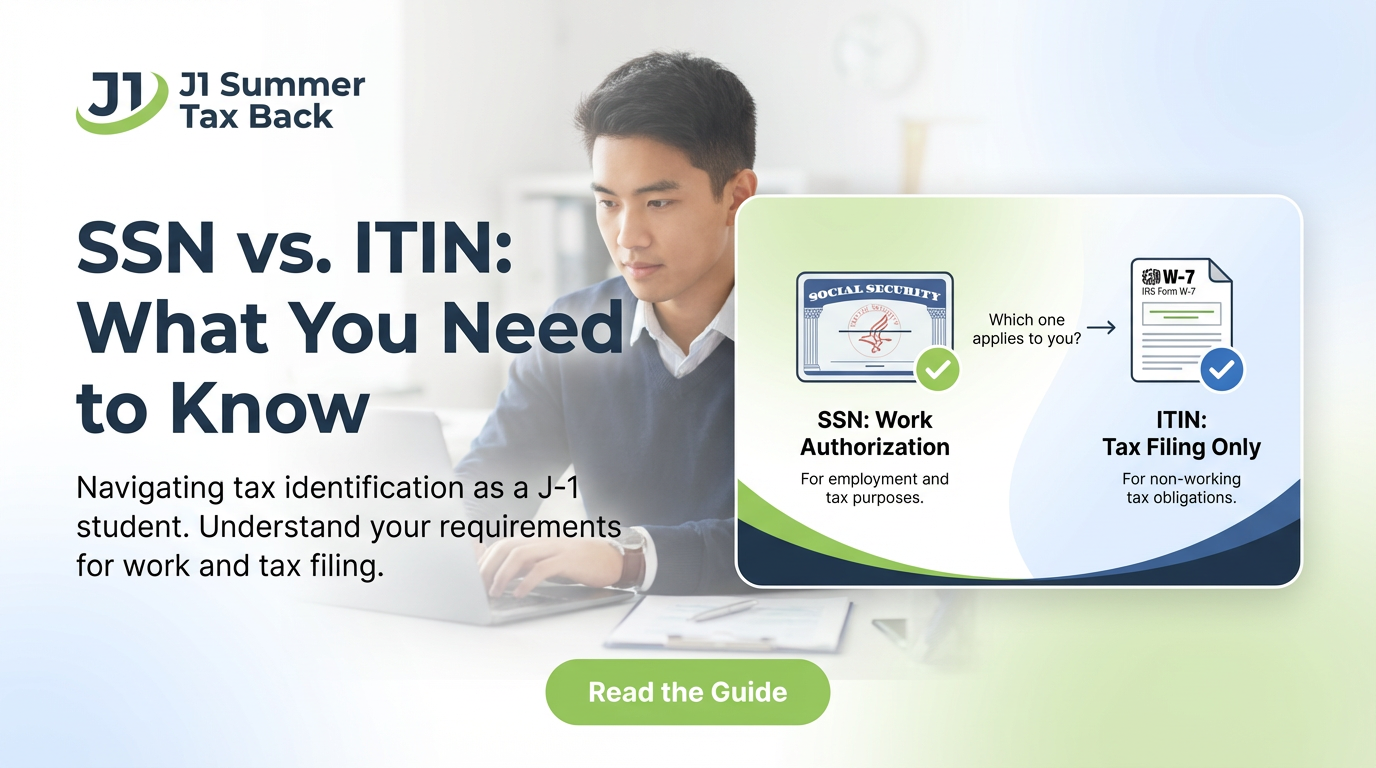
SSN vs ITIN: which one do you need?
Social Security Number (SSN)
You can only obtain an SSN if your visa allows you to work in the U.S. An SSN is required for employment and simplifies tax filing.
Individual Taxpayer Identification Number (ITIN)
If you are not eligible for an SSN but still need to file taxes, for example due to a taxable scholarship or other U.S. income, you must apply for an ITIN using Form W-7.
ITIN processing can take several weeks or longer, which is why J1 Summer Tax Back strongly recommends applying as early as possible if you need one.
Important tax deadlines for nonresidents
- 15 April 2026 is the federal tax filing deadline for the 2025 tax year
- Form 1042-S is usually issued by 15 March
- W-2 forms are issued by 31 January
Missing deadlines can lead to penalties and may affect future visa or immigration applications. This is one of the main reasons nonresidents choose J1 Summer Tax Back instead of filing alone.
Why document accuracy matters
Filing with missing or incorrect documents can result in:
- IRS penalties and interest
- Delayed or lost tax refunds
- Problems with future U.S. visas or Green Card applications
J1 Summer Tax Back focuses exclusively on nonresident tax cases, which means we know exactly how to handle W-2s, 1042-S forms, ITIN applications, and Form 8843 requirements correctly.
Final thoughts
Knowing which documents you need is the first and most important step toward filing a compliant nonresident tax return. Once your documents are organized, the rest of the process becomes far less stressful.
If you want expert help reviewing your documents, identifying missing forms, and filing correctly as a nonresident, J1 Summer Tax Back is here to guide you from start to finish. 37
Start using our services by selecting the right service for your case here: https://j1summertaxback.com/service-selector