
 How to Prepare Your State-Only Tax Return as a Nonresident
What International Students and J-1 Visa Holders Need to Know
Filing U.S. taxes as a nonresident can already feel overwhelming,and realizing you may also need to file a state tax return can make it even more confusing.
At J1 Summer Tax Back, we regularly hear from international students and J-1 visa holders who say:
“I already filed my federal tax return,do I really need to file a state return too?”
The short answer is: sometimes yes, sometimes no.
This guide explains when nonresidents must file state taxes, what documents are required, and how J1 Summer Tax Back helps you handle state-only tax filing correctly and stress-free.
Do international students and J-1 visa holders have to pay state taxes?
It depends entirely on where you lived or worked in the U.S.
Unlike federal taxes (which are governed by the IRS), each U.S. state has its own tax laws, filing rules, and deadlines. Even if you’re a nonresident alien for federal tax purposes, you may still have a state filing obligation.
States with no income tax
If you lived and worked only in one of the following states, you generally do not need to file a state income tax return:
- Alaska
- Florida
- Nevada
- South Dakota
- Texas
- Washington
- Wyoming
Additionally:
- New Hampshire and Tennessee tax only certain types of investment income, not earned income.
If you earned wages, stipends, or taxable scholarships in any other state, you will likely need to file a state tax return.
At J1 Summer Tax Back, we first identify exactly which state(s) require a return,so you don’t over-file or miss an obligation.
State tax deadlines for nonresidents
Most states follow the federal deadline.
For the 2025 tax year, the most common deadline is:
📅 15 April 2026
However, there are important exceptions:
- Iowa – 30 April 2026
- Louisiana – 15 May 2026
Missing a state deadline can result in penalties, interest, and compliance issues, even if your federal return was filed correctly. This is why J1 Summer Tax Back always checks state-specific rules.
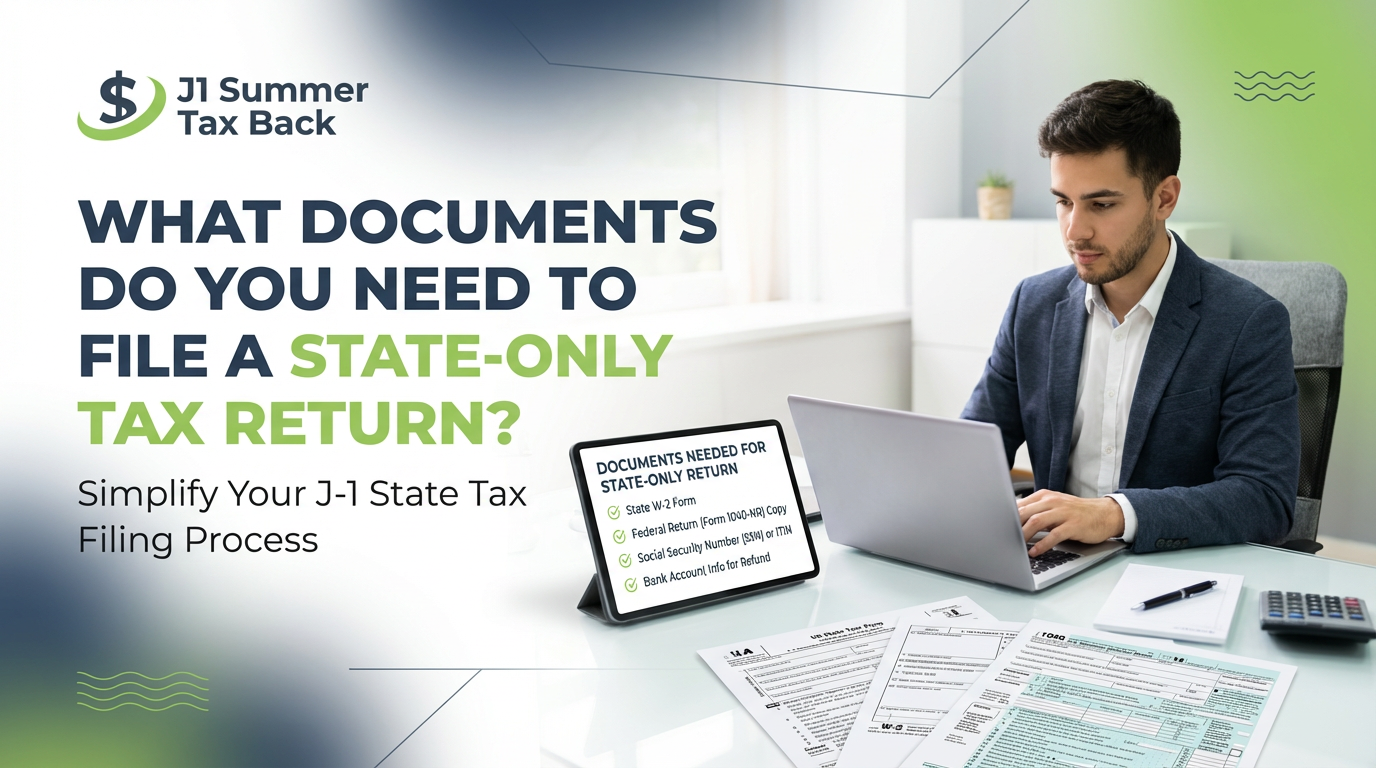
What documents do you need to file a state-only tax return?
To prepare a state-only tax return as a nonresident, you’ll usually need:
- Passport
- U.S. entry and exit dates
- Visa / immigration documents
- Form DS-2019 (J-1 visa holders)
- Form I-20 (F-1 students)
- Income documents
- Form W-2
- Form 1042-S
- Form 1099 (if applicable)
- SSN or ITIN
- A copy of your already-prepared federal tax return (Form 1040-NR)
If you’re missing an SSN or ITIN, J1 Summer Tax Back can guide you through obtaining the correct tax ID before filing.
Can nonresidents file a state-only tax return?
Yes.
If you already filed your federal tax return (or it was prepared by another service), you can still prepare only your state tax return.
At J1 Summer Tax Back, we help nonresidents:
- File state-only returns
- Avoid filing unnecessary federal forms again
- Ensure the state return aligns correctly with the federal 1040-NR
This is especially common for J-1 participants who:
- Worked in one state for a short period
- Moved between states
- Had tax withheld at the state level but no refund claimed
Can international students e-file state taxes?
In most cases, no.
State tax returns for nonresident aliens usually cannot be e-filed. They must be:
- Prepared correctly
- Printed
- Signed
- Mailed to the correct state tax authority
Errors in state filings are very common for nonresidents. J1 Summer Tax Back provides clear mailing instructions so your return reaches the right office the first time.
Why nonresidents trust J1 Summer Tax Back for state taxes
State tax rules are often even more confusing than federal rules,especially for nonresident aliens. Filing the wrong state form or skipping a required return can create long-term problems.
With J1 Summer Tax Back, you get help that is specifically designed for J-1 visa holders and international students, including:
- Correct identification of state filing obligations
- State-only tax preparation when federal filing is already done
- Nonresident-specific compliance checks
- Clear instructions for mailing your return
- Peace of mind that your taxes align with your visa status
State taxes may feel like “just one more thing,” but filing them correctly protects your IRS history, visa record, and future U.S. applications.
Final thoughts
Even if your federal taxes are finished, your U.S. tax obligations may not be. State tax compliance is a key piece of staying fully compliant as a nonresident.
If you’re unsure whether you need to file a state return,or you know you do but want it handled correctly,J1 Summer Tax Back is here to help. 36
Start using our services by selecting the right service for your case here: https://j1summertaxback.com/service-selector